How a mediation works
Five steps, about five minutes each. These are the real screens, with an example of Alex and Sam arguing about phones at dinner.
Start a mediation
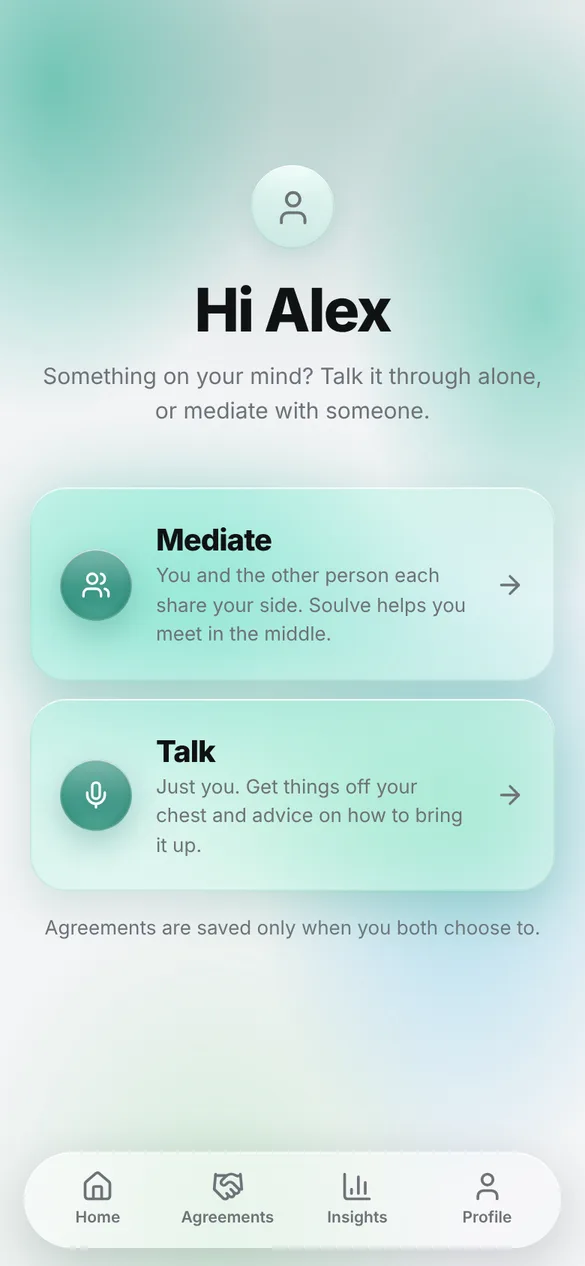
Open Soulve and choose Mediate. Say who you want to talk it through with and, if you like, what they are to you: partner, friend, parent, roommate, colleague. Soulve adapts to your relationship, because a fight between flatmates needs different ideas than a fight between partners.
Tell your side, privately
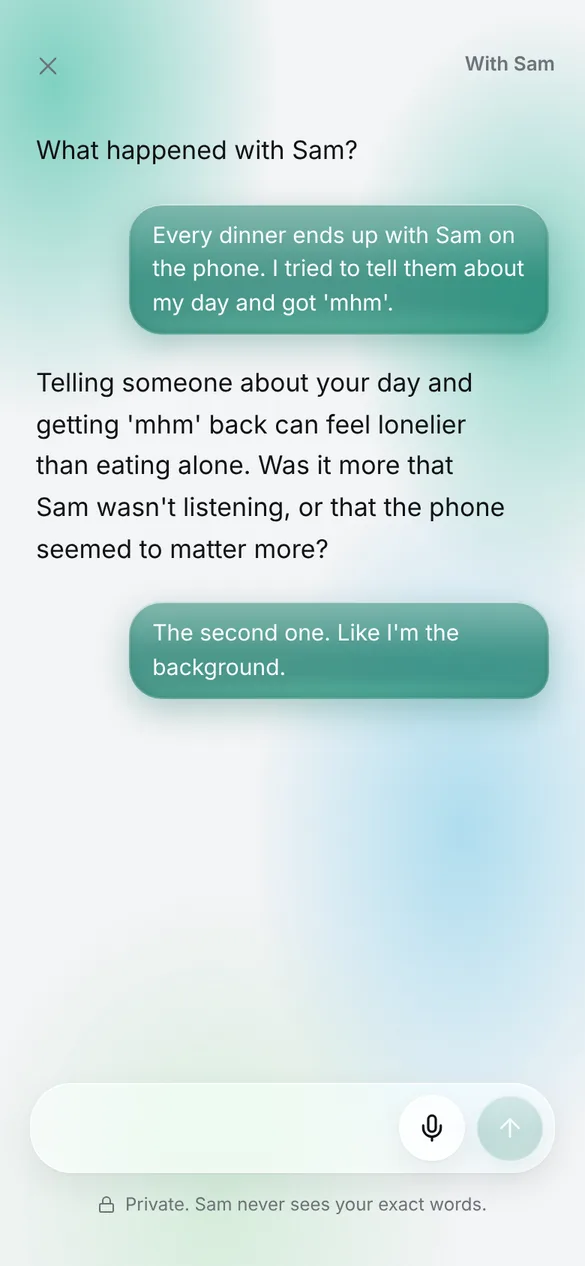
Tell Soulve what happened, however it comes out. Venting is fine, nobody else reads it. Over a few short messages, it finds out five things:
- What happened
- How it made you feel, precisely
- What you need underneath
- Whether it has come up before (asked once, and you can skip it)
- What you'd like from them going forward
It asks one question at a time and reflects back what you said, so you can tell it actually read it. When it has the full picture, you tap I'm done, send my side.
Send them the link
Send the other person a link by WhatsApp, text or however you usually talk. It opens in their browser, so they don't need to install anything, and each link works for one person only.
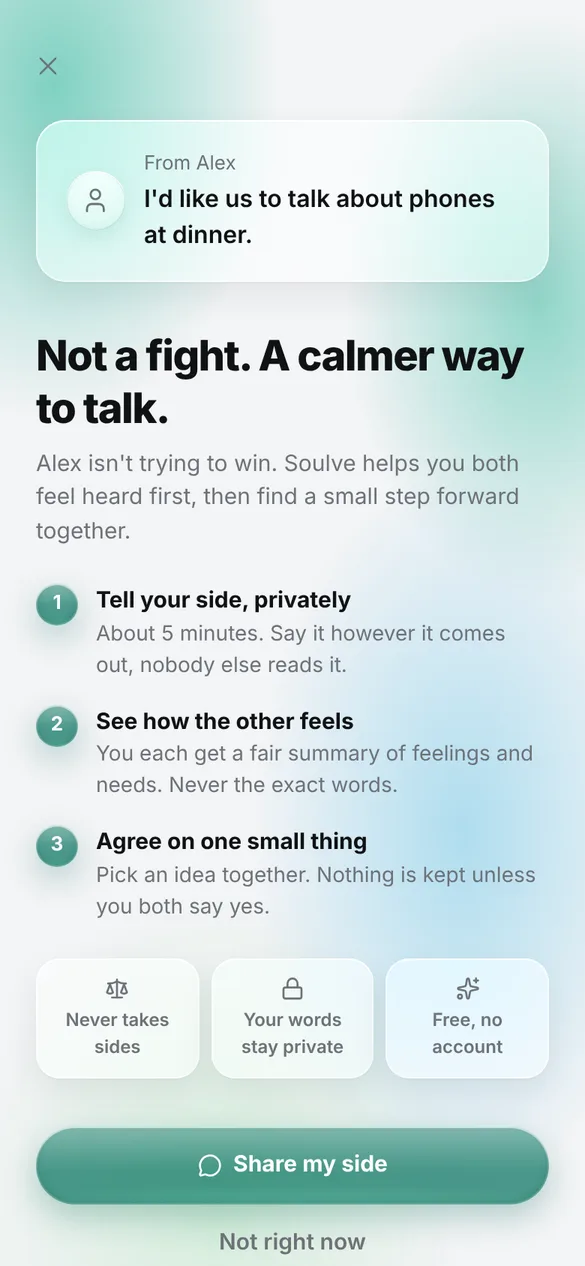
They first see a neutral topic line written by Soulve. It describes the subject, never anyone's behaviour, and contains none of your words.
They can share their side in about five minutes, or tap Not right now. The link stays open, and you aren't told that they opened it.
See how the other feels
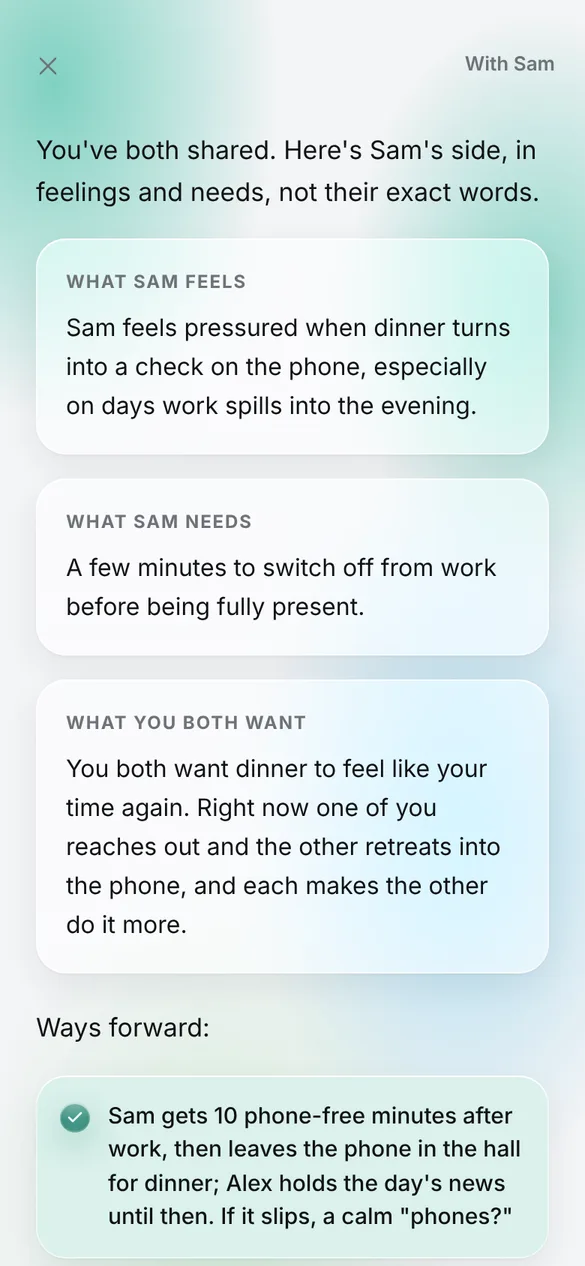
Only once you've both shared does Soulve look at both sides together. Each of you gets your own result about the other person:
- What they feel, put fairly and warmly, never their accusations or exact words
- What they need underneath the surface topic
- What you both want, and the cycle you might both be caught in, described as a shared problem, not anyone's fault
Then three ways forward. They're the same for both of you, and each one is a small deal: who does what, when, and what happens if it slips.
Before you see any of it, Soulve checks its own draft a second time: is it neutral, does it reveal anyone's words, is it about your argument rather than any argument? Anything that fails is rewritten.
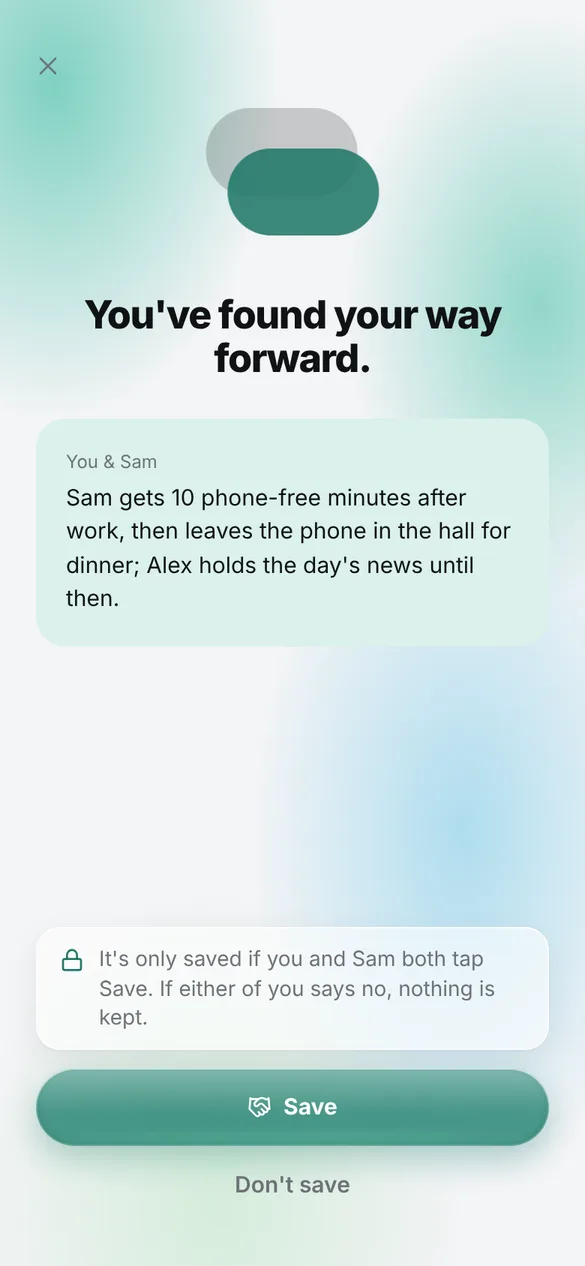
Agree on one small thing
You each pick the idea that feels right. If you pick different ones, you can talk it through and pick again.
It's only saved if you both tap Save. If either of you says no, nothing is kept. Saved agreements live in the Agreements tab for both of you, and either of you can delete one at any time.
Saying something in the middle of it
While you're choosing, you can send the other person a message through Soulve. It rewrites it in your voice so it can actually be heard.
It takes out blame, sarcasm, "always" and "never", threats and demands, keeps what you really mean, and ends with a specific request where there is one. It never adds facts that weren't in your message.
An illustrative example.
Talk: just you
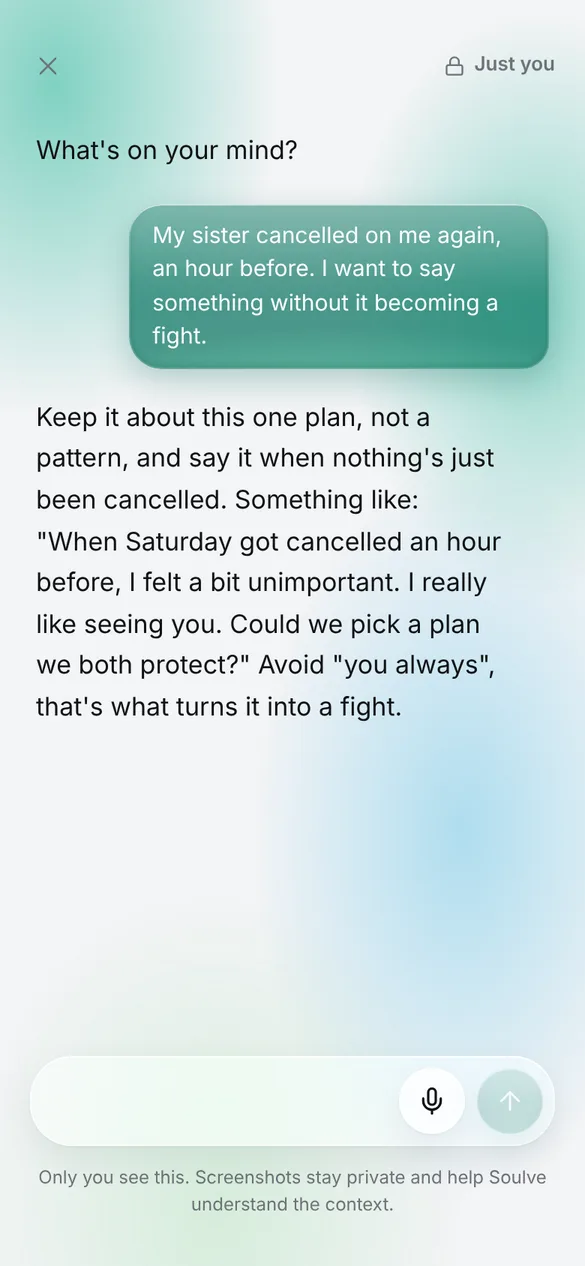
A private conversation with Soulve that nobody else will ever see. It can be about a problem, a worry, or good news. If you're sharing good news, Soulve is just happy with you.
When it's a difficulty, Soulve acts like a coach, not just a listener. From the second or third reply on, it gives concrete help: the exact words you could say, when to say them, one thing to avoid, and how the other person will probably react. Ask it "am I wrong?" and it answers honestly.
At the end you can get three pieces of advice: one for the next time it heats up, one for making up afterwards, and one habit for the long run. You can also add screenshots of a chat for context. They stay private.
Small things it does
Soulve replies in the language you write in, slang included.
Writing in capitals or sending angry bursts? It acknowledges how intense it feels and suggests a short pause first.
It uses your names and the words you use for each other, like "your dad", not "your partner".
It never asks two questions at once, and never asks something you already answered.